Aptly – Modular Recruiting
AI-Assisted Workflow Hackathon
~30 Hours active development | 1-Week Project
Next.js, Temporal, Couchbase, Python, Docker, Cline, Polytope
Finalist & 3:rd place

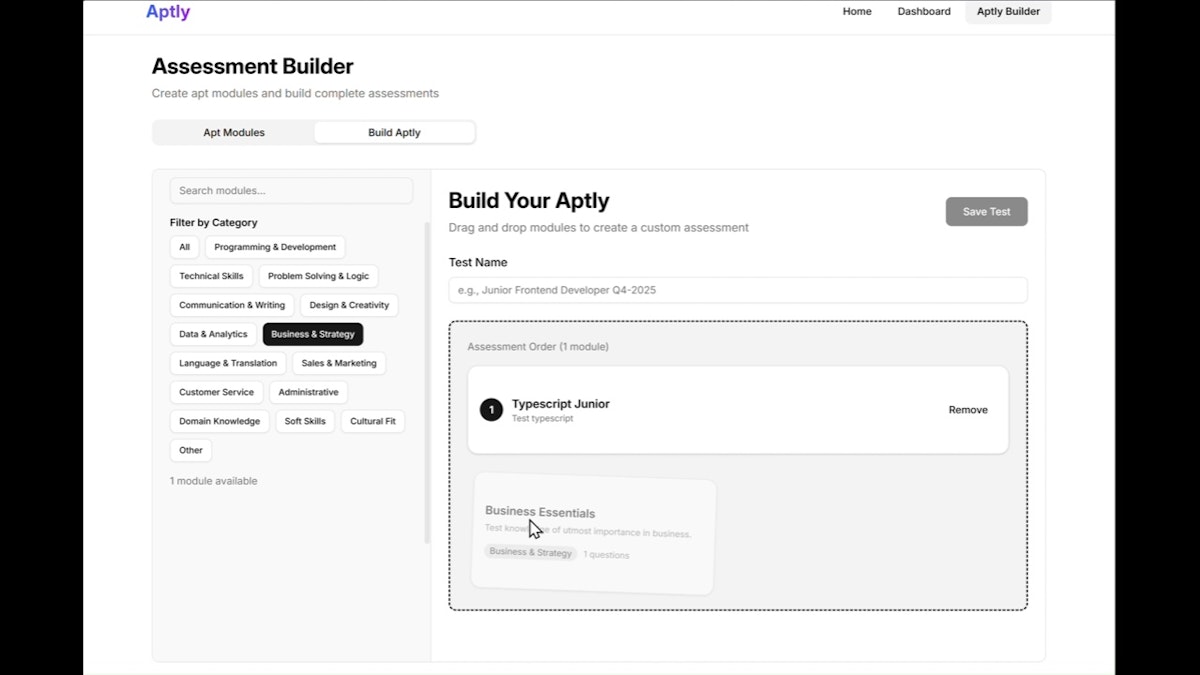
Designing and building a product under intense time pressure to appeal to a demanding jury of corporate executives and banking profiles.
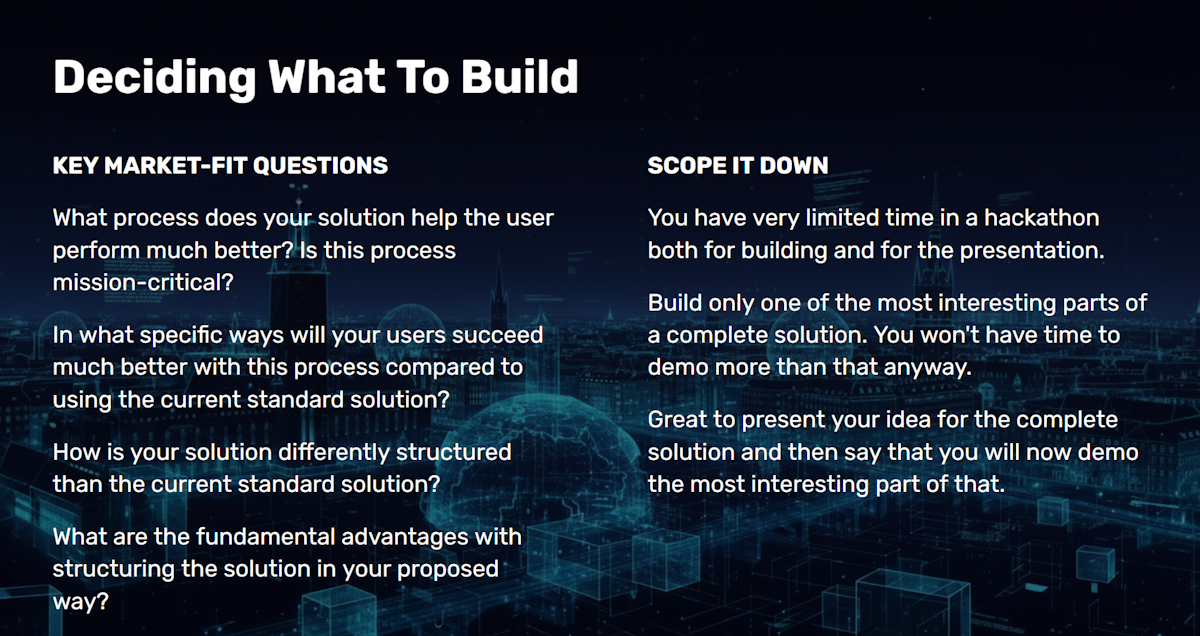 The briefing we received
As a solo participant, I created Aptly, a modular, AI-assisted recruitment platform with a "Human-in-the-loop" philosophy. Instead of replacing the recruiter, Aptly streamlines the screening process through customizable modules for skill testing ("Apt Modules"), saving massive amounts of time for both HR and technical experts.
Before I wrote a single line of code or sketched a UI, I needed to understand who I was building for. I analyzed the composition of the jury—business leaders from companies like H&M and tech figures within the banking sector. Their biggest challenge?
Recruiting technical talent at scale is expensive, time-consuming, and a perpetual bottleneck.
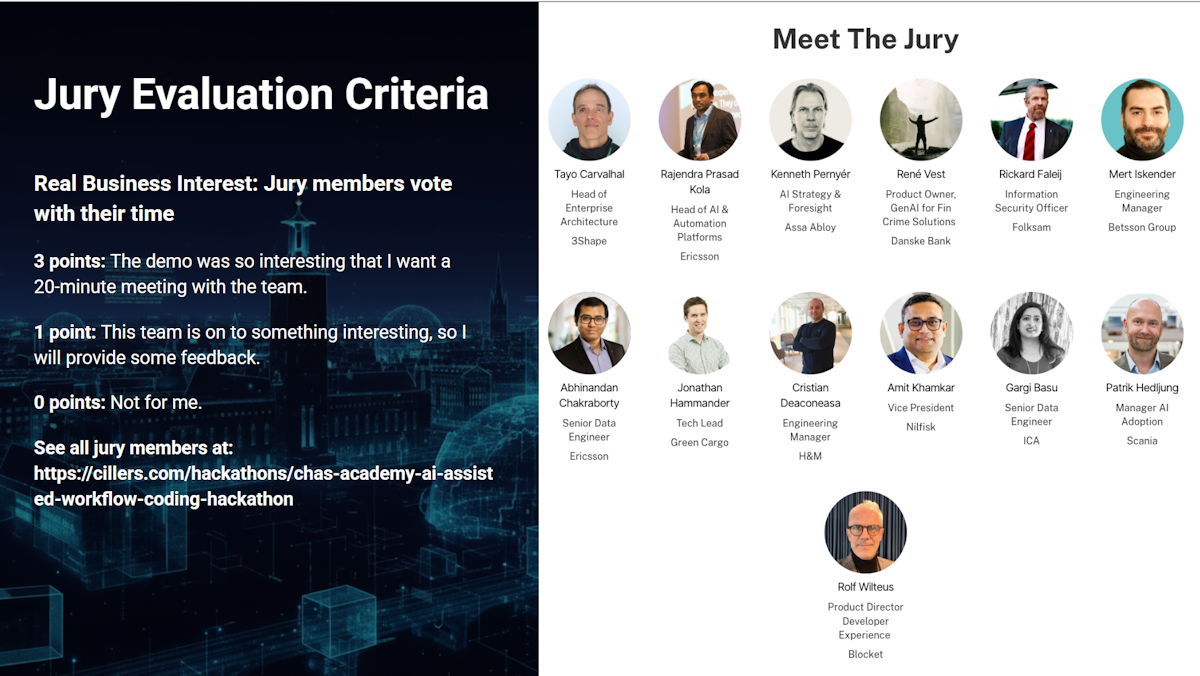 Preliminary jury and their evaluation criteria - AI-Assisted Workflow Hackathon
To validate my assumptions, I reached out to and conducted short, semi-structured interviews with various recruiters. The insight was clear: HR has "people skills" but often lacks the deep expertise required to assess niche technical skills early in the process. Pulling in senior developers to validate skills, for example, is extremely expensive.
The goal became:
To build a platform that respects human judgment while automating the "grunt" work. Not a "black box" that makes decisions, but a tool that provides HR with the right decision-making foundation immediately.
With the insights from the research, I shifted my focus from creating a standard CV scanner/ATS to building a modular testing platform.
I concluded that a system was needed where HR, without any coding skills, could drag and drop standalone "skill modules" (e.g., TypeScript Fundamentals, Business Essentials) to build unique, customized tests for every specific role.
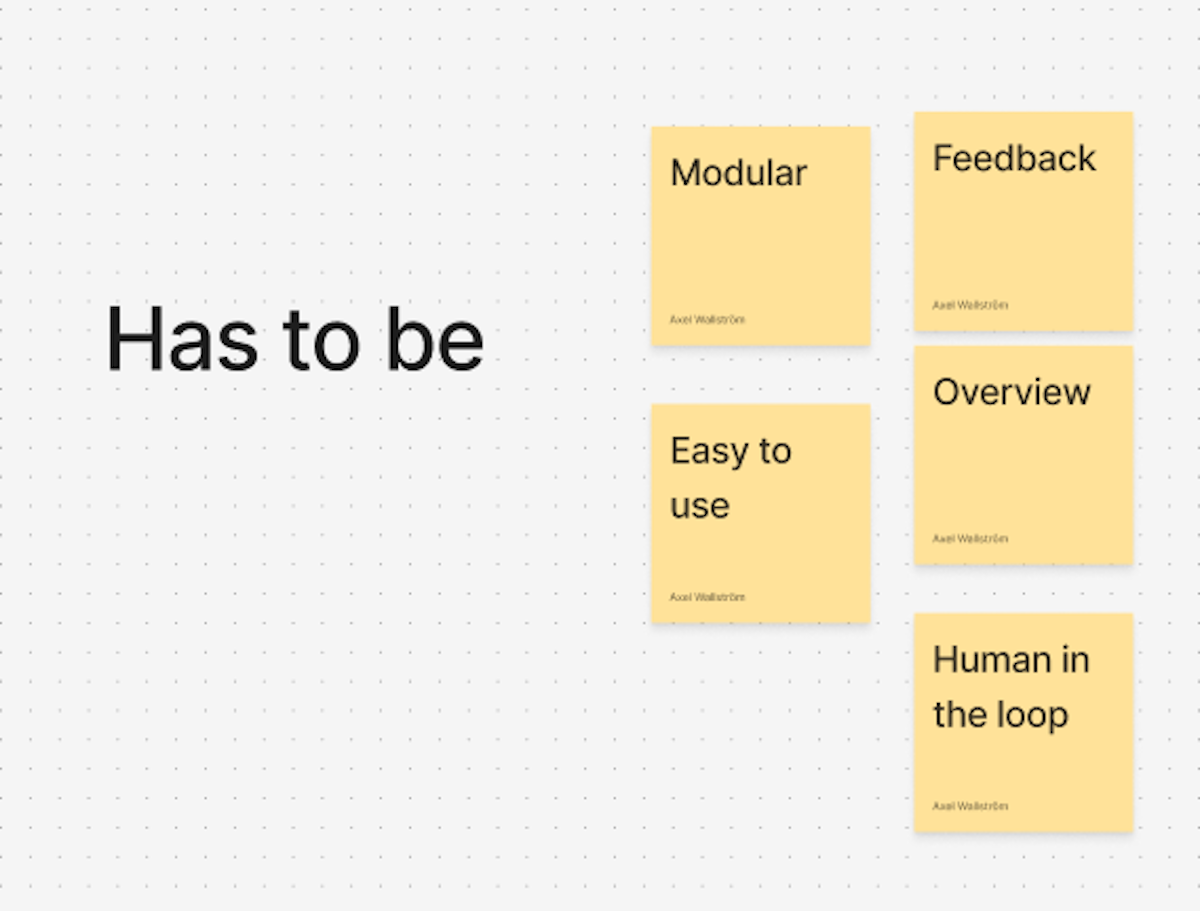 Core platform values I wanted to achieve
This means that candidates are tested before they take up time from the company's experts. The asynchronous backend orchestration (built with Temporal) handles the flow seamlessly for the candidate, regardless of how many modules HR has added.
Here are the first simple wireframes I arrived at as an MVP for the recruiter.
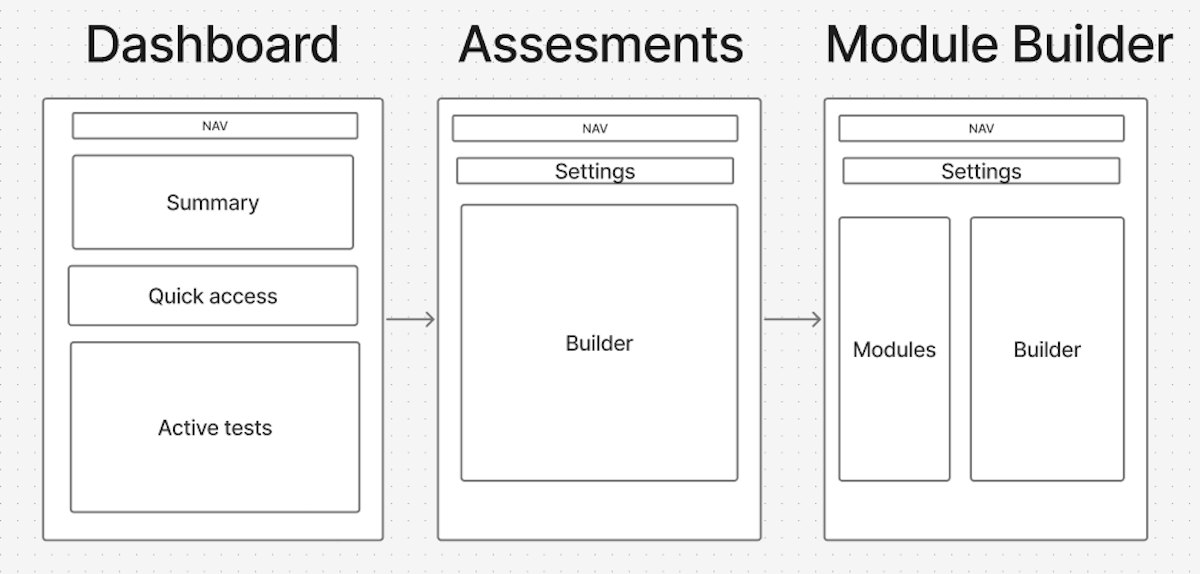 Platform architecture wireframe
And an extremely simple wireframe for the candidate's flow.
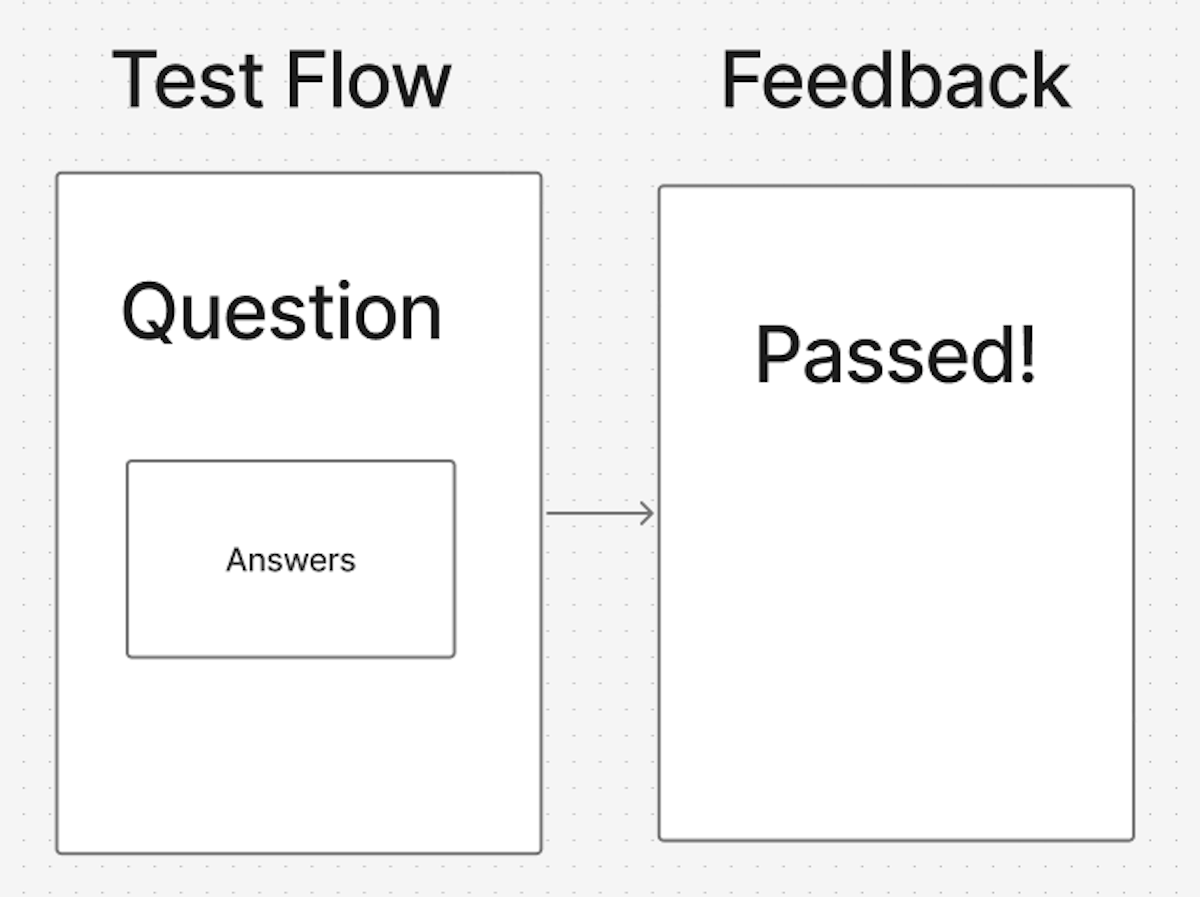 Candidate test flow
Since this was a hackathon after all, I started coding to produce a product and a demo.
During development, I established a very good connection with the HR department at SKANSKA and visited their headquarters for a meeting!
This led to how I structured the "Review" view, the archiving function for previous tests, and the simplification of the interfaces. Once a candidate has submitted, they appear under "Pending Reviews." There, HR can immediately see a summary, read the candidate's specific answers, add their own notes, make a human assessment, and lastly - archive the specific test for that specific role!
"Congratulations - You have been selected as one of five finalist to present at the grand finale on November 11th. We especially liked your choice of business case, your UX, that you built a multi-level multistep workflow involving human review, that you are using an enterprise-grade platform for handling your workflows and your pedagogical presentation. We will be available to help you improve your demo. More details about this to follow."
— I became a finalist and received a meeting full of great feedback, where one piece really stood out!What happens when you find a unicorn? They get hired by someone else before HR even has time to log in.
I gained this insight just days before the grand finale and initially considered several complex solutions that would have required a massive amount of development work.
To prioritize effectively, I conducted a feasibility assessment and created an Impact/Effort matrix.
The matrix made it clear that building a brand-new feature from scratch would take too long (high effort). It was then I realized that, ironically, I had overlooked the platform’s greatest inherent strength: its extreme modularity (high impact). Instead of over-engineering a new solution, I could simply tweak the dashboard UI and leverage the existing infrastructure to create two new modules:
CV Scanner: Which compared requirements with the position's criteria.
Triage Module: Which categorized successful applicants into: Stars (Good CV and good test results), Diamonds in the Rough (Poor CV but good test results), and Must Hire (triggers a notification to the recruiter or higher up in the chain).
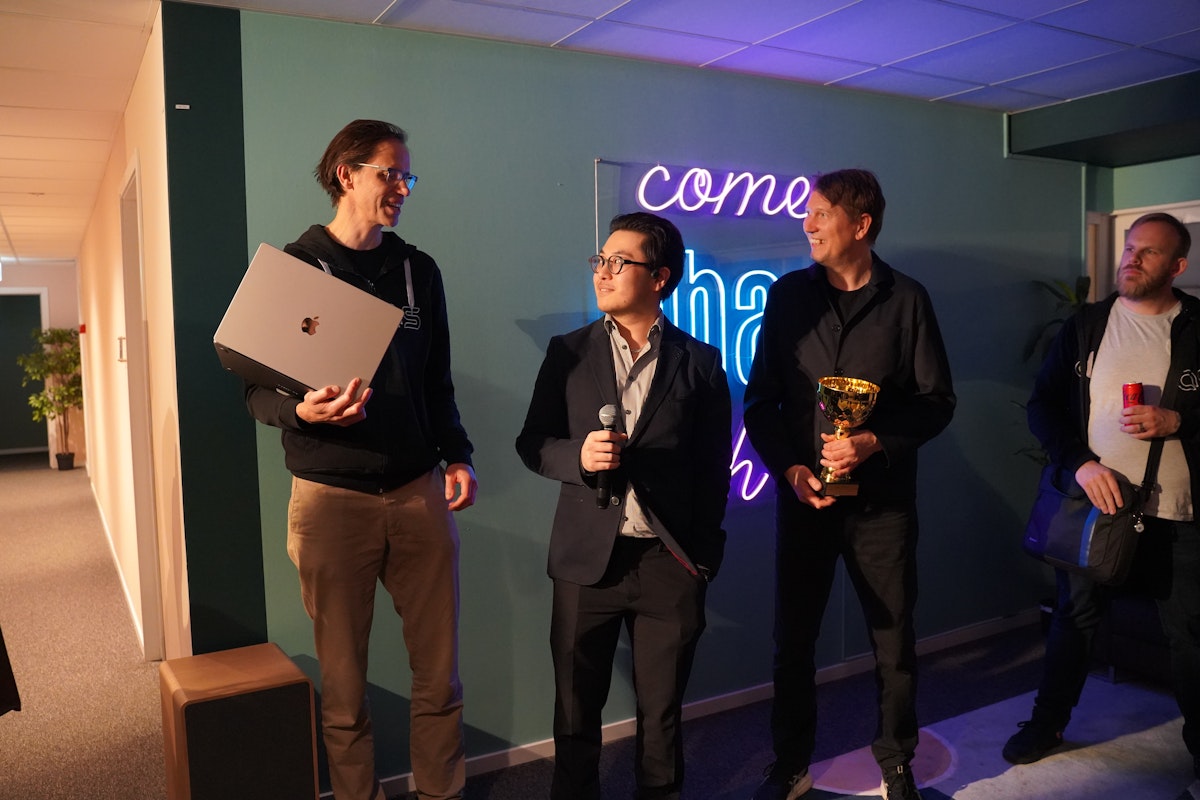 Award ceremony with Peder Linder, Axel Wallström och Per Lange
Despite the limited timeframe while studying full-time in parallel, I succeeded in getting Aptly all the way to the final, taking home 3rd place in front of a demanding industry jury.
Research is crucial. Spending time on strategic audience analysis, HR interviews, and rapid iteration was the difference between building a fun technical demo and a business-relevant product that could land a third-place finish.
Clear UI for complex backend. Temporal was required to orchestrate the underlying workflows, but my greatest success was hiding this complexity behind an intuitive interface for the recruiter. The technology served the user experience, not the other way around.